
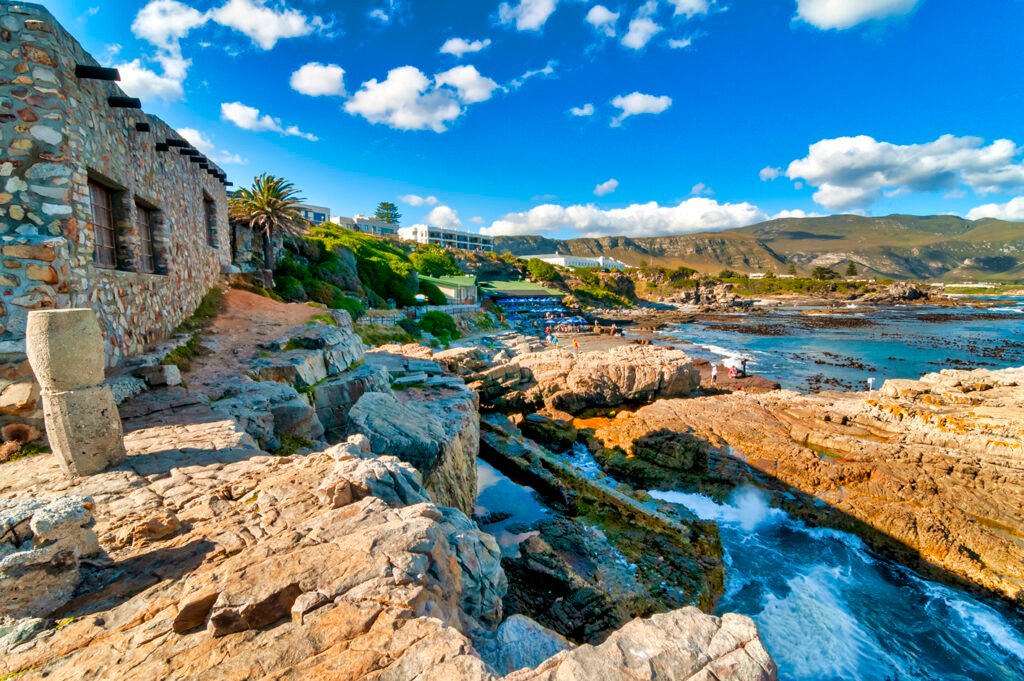
A Rich Maritime History
Hermanus preserves its rich maritime past through several key cultural sites that showcase the town's evolution from a humble fishing village to a world-renowned whale watching destination. The town's museums and cultural centers tell the story of whaling history, marine conservation, and the local abalone industry that shaped this Western Cape coastal community.
Old Harbour Museum and Maritime History
The Old Harbour Museum stands as the centerpiece of Hermanus's maritime heritage. Located at the historic harbor, this museum tells the story of the town's transformation from a small fishing settlement to South Africa's premier whale watching destination.
Visitors can explore exhibits that detail the town's whaling past. The museum displays old fishing boats, nets, and tools used by early fishermen. Historical photographs show how the harbor looked decades ago.
The museum focuses on the fishing village roots that defined Hermanus for generations. Local families built their lives around the sea, catching fish and later hunting whales for oil and other products.
Key exhibits include:
- Original fishing equipment from the 1800s
- Historical maps of the Hermanus coastline
- Stories of local fishing families
- Traditional boat building techniques
The museum opens daily and offers guided tours. Staff members share stories about specific families who shaped the town's maritime culture.
Whale Museum and Education
The Whale Museum dedicates itself to marine mammal education and conservation. This facility houses impressive whale skeletons and interactive displays about Southern Right whales that visit Hermanus waters annually.
The museum's main attraction features a complete whale skeleton suspended from the ceiling. Visitors learn about whale anatomy, behavior, and migration patterns through hands-on exhibits.
Educational programs teach visitors about marine conservation efforts. The museum explains why Hermanus became known as the world's best land-based whale watching destination.
Museum highlights:
- Life-size whale skeleton displays
- Interactive whale sound stations
- Marine conservation exhibits
- Seasonal whale migration maps
School groups frequently visit for educational programs. The museum also conducts research projects with local universities and marine biologists.
Heart of Abalone and Abalone Farming
Heart of Abalone represents Hermanus's modern aquaculture industry. This abalone farming operation offers tours that show visitors how these prized shellfish are cultivated sustainably.
The facility demonstrates the complete abalone farming process. Visitors see the different growth stages and learn about the careful water management required for successful cultivation.
Abalone farming became important to the local economy as traditional fishing declined. The tours explain how this industry provides jobs while protecting wild abalone populations from overfishing.
Tour features include:
- Live abalone viewing tanks
- Feeding demonstrations
- Sustainability practices explanation
- Tasting opportunities
The facility emphasizes conservation education. Staff explain how farming reduces pressure on wild abalone stocks in the region.
Historic Hermanus and Fishing Village Roots
Historic Hermanus preserves the character of the original fishing village through protected buildings and cultural sites. The old town center maintains its small-town charm despite growth as a tourist destination.
Walking tours guide visitors through historic neighborhoods. Original fisherman's cottages still stand alongside the harbor, showing how families lived in earlier generations.
The Fisherman's Village area near the Old Harbour contains some of the town's oldest structures. These buildings demonstrate traditional Western Cape architecture adapted for coastal living.
Historic churches reflect the community's religious heritage. Several buildings date back over 100 years and feature unique architectural details.
Local heritage organizations work to preserve these cultural landmarks. They maintain walking trail markers that identify significant historical sites throughout the town center.